Showing posts with label art. Show all posts

October 31, 2013

Pretty, dreamy Marie (Laurencin)

It's been some time since I have written about great women artists and it is time. Most have not heard of Marie Laurencin, but she sure had some famous friends. Like Mademoiselle Chanel.

Marie Laurencin - Portrait of Mademoiselle Chanel, 1923 Source

Marie was born in Paris and studied porcelain painting before falling in with hip cats of the day: Braque, Picasso, Gris, Apollinaire. Were these artists aware that they were to become something significant? Did they instinctively seek each other out? Were any perfectly ordinary friends among them now lost to history?

Marie Laurencin, Group of Artists (1908). Image via Musée Marmottan Monet, Paris.

Marie was there when crazy notion of cubism cane about. A few of her pieces have a whisper of cubist lines and sober colors. But mostly Maurie Laurencin stuck with what she did best, lovely, effervescent, with the same cast of languid girls. 

Marie Laurencin - Les jeunes filles - Moderna Museet, Stockholm

Why isn't Marie Laurencin's name known worldwide like the names of her posse? Was she too much of a one-note?  Is her art just too pretty, lightweight, lacking the grit that would make it important? Perhaps it is all those things, pleasant and superficial. 


September 20, 2013

Real Boy

This sort of painting, despite its merits, would not typically catch my prolonged attention. My favorites are more modern, more ambiguous, and less academic. But this portrait of a little boy with a long name, destined not to grow up, came to life during story time with  my younger son.  The painting is in our An Alphabet in Art book under M for Magpies. Suddenly, through the eyes of a three-year-old, I saw this painting for the very first time.

This is a portrait of a tiny kid, a toddler really, just the sort of boy we would meet at a playground. And birds, oblivious to danger. And kitty-cats, a little sinister but soft. As I watch my own little boy look at length at his long-lost friend, asking questions, the formal portrait fades and all that's left is a real boy.

Manuel Osorio Manrique de Zuniga by Francisco de Goya y Lucientes - image loaned from the Met
Read about our favorite kiddie art history books here.

August 1, 2013

Conversation Piece

I am in love with this itty bitty painting! In this most comfortable of rooms, chock full of art and books but with adequate seating, pleasant conversation flows. Do you suppose they are sensibly chattering about weather? Or debating the merits of life dedicated to the pursuit of arts?


Vanessa Bell, Conversation Piece 1912 oil
Source

The piece is by Vanessa Bell,Virginia Woolf's sister and a talented artist in her own right. BBC has a treasure trove of art - here is a slideshow of Vanessa Bell's works.

June 22, 2013

Organized Chaos: Art Supplies

My art supplies habit dates back to my own childhood and I've been hording pastels and gouache paints ever since. So it is no surprise that we order art supplies in bulk these days. But a bigger question is how to corral the goodies.

We've tried boxes on the shelves but tucked away the paints just never come out. Freely roaming art supplies around the house drive everyone here mad. Little jars for crayons are good in theory but if the crayons were out, they never made it back into the said jars. So now we are trying stackable boxes. So here are our must-have supplies, one box at a time.

Labels are really a road map for supplies to make their way back.
Paper - plain white and colorful construction paper, extra packs are stashed away. Tissue paper is helpful too.

Crayons are a given, loads and loads of crayons. This isn't the place to skimp. Crayola is the way to go, cheaper crayons just don't stand up and are too waxy. While natural and posh crayons appeal to my own sensibilities, Klatch kids like Crayolas very well. 

Crayons are bound to break and ratty broken up crayons are not fun to draw with, but fun to melt.

Oil Pastels. These are not a must strictly speaking but a nice addition, bright and vibrant.

Keeping crayons in jars failed us miserably so now crayons get their own box.
Markers. Self explanatory. Washable are best. The skinny pencil size ones remind me of the ones I had as a kid. The small pip squeaks are popular around here too.

Pencils. These do not get as much play around here these days, perhaps time to invest in a decent pencil sharpener.


Tools box is full of glue (liquid Elmer's and glue sticks), glue gun for supervised activities, extra scissors since they always seem to go missing. Masking tape in different colors has been a welcome addition. Sponges and droppers are waiting for the right project to come along.


Odds and ends - this is the fun box bursting with goodies. You can never risk running low on goodly eyes. The pad of paper dolls is possibly the best thing we ever bought. One never knows when pipe cleaners, popsicle sticks, and poms will come in handy.  Feathers and glitter. We need to replenish our glitter glue supply.

Two other very worthwhile additions for non-messy fun. Floam, sticky little foam beads, though somehow the colors get mixed together right away, and Wikki Sticks, bendy waxy sticks.


Of course there are other supplies that do not get every day use and are squirreled away elsewhere. Since we are a gluten free household, Play Doh is out of bounds and early experiments with Moon Sand proved to be detrimental to the carpeted area. Our molding product of choice is Model Magic - clean and bright, at least until the colors get mixed. A tub of clay is popular around here. Turns out cardboard six-pack boxes are perfect for storing pint sized bottles of tempera paints on the very top shelf.

So to recap, must-have supplies to buy in bulk - I am a big fan of Discount School Supply and Michael's:
  • Paper - stacks and stacks of paper, different colors, textures, and size
  • Crayons - a good supply of fresh crayons
  • Washable markers
  • Color pencils
  • Tempera and watercolors (acrylic is too risky for the younger set!)
  • Lots of brushes in different sizes
  • Extras of glue and scissors
  • Googly eyes (yes, these make the must-have category)
  • Popsicle sticks
  • At least one of the following - poms, glitter, pipe cleaners, feathers
  • Something to mold - play doh, model magic, clay
Nice additions:
  • Colorful tissue paper
  • Paper doll cut-outs
  • Pony beads
  • Floam and Wikki Sticks
  • Felt fabric
  • Foam shapes
  • Ink pads and stamps
  • Stickers
  • Sun paper
  • We'd like to try Magic Nuudles, seems like a worthy addition
Anything else to add to this list?

March 14, 2013

So You Are Planning a Scavenger Hunt....

A few days ago this little box arrived at our doorstep.

Top Secret Scavenger Treasure Hunt at the Art Museum

Inside, a letter: "We need your help! Greedy Art Collector wants to snatch precious art works for his personal collection. We require a clever art detective to help find each masterpiece and confirm that all are still hanging on the walls of the museum."

Each numbered envelope contains a clue
A wild chase led us through the art museum following the clues left by greedy about his heinous plans. Some three hours and many detours later we tracked down six works of art - Da Vinci (the one and only work in US!), Monet, Picasso, Van Gogh, Warhol, Rothko, a healthy dose of art history. As instructed, we took a photo of each as proof. Hooray, Greedy did not steal the precious treasures! Great fun, awesome one-on-one bonding, and a memory to treasure.

So, if you are planning a scavenger or treasure hunt of your own (and as a wise man said, if you never have, you should, these things are FUN and fun is good), here are a few lessons learned from the trenches of scavenger hunt planning:

Choosing Treasures. For a museum adventure, it was critical to choose artworks that we could count on being displayed. The choices were also well-known works that museum staff would readily point us to and represented different types of works (a portrait and a landscape, from Renaissance to modern). The order of clues was organized so we would not find ourselves zigging and zagging but also so the works would not be in a single gallery making adventure all too short. We set our adventure at the art museum but these principals apply no matter where you go.

It's all about the mystery. Packaging matters. Theatrics made the day more exciting: the early morning doorbell, the box on the doorstep, the rolled up mysterious letter, the tale of Greedy. It is also very hard not to spill the beans ahead of time so be warned!

Plan ahead. Yes, planning a scavenger hunt takes time. More than one might expect. It is also far easier to have this sort of adventure on a weekday, when the museums are not as crowded.

Make it personal. Sure, there are downloadable templates but making the clues personalized to books we've read and artists we knew made it more accessible and more fun. Again, takes time, but pays off in spades.

Clues. Clues should not be too difficult but also not too obvious. Just enough of a challenge, but not so tricky that one gives up. You could stick with a single format or vary between different types of puzzles.
  • Secret Code. I am a fan of hieroglyphics but Morse code or really any symbols can be used. Each symbol represents a letter and one deciphers the message using the key. We liked this one and will probably keep coming back to the ciphers! I recently discovered this hieroglyphics typewriter and it is pretty awesome, just don't forget to include the key!
  • Crossword. Create your own crossword to spell out the clue (I used numbered letter boxes to flag the letters that spelled the answer). This one was really fun, it also took up a good bit of time to create.
  • Reverse writing, that can be read with the help of a mirror, is remarkably easy to accomplish (MSWord WordArt). Of course that was an obvious choice for our Da Vinci clue since he often used mirror writing.
  • Rebus (pictures representing words or parts of words) is a forgotten art. Thanks to technology these are much easier to create (just Google a rebus generator).
  • Puzzle. Puzzle pieces when put together spell out a clue. I used just a cut up photo of a painting that led us to the artist. 
  • Invisible Ink. My last attempt at invisible ink was a bust but it is something that we'll try again!


This post was incredibly helpful in writing the clues! If you can't tell, we are hooked and anticipate new adventures soon!


If you and your tots like a good mystery but don't have the time and inclination to plan your own, try this Top Secret subscription from Highlights Magazine. It's a 'whodunit' kit set in different countries around the world. 


February 28, 2013

Art History for Breakfast

Would you believe it, around here we like a healthy dose of art? From early age Klatch tots are getting to know Leonardo and Vincent, troll art museums, and learn to express their artistic preferences and dislikes. At times it is a bumpy road - not gonna lie, before they embraced 'important art' getting their interest was only possible through a sheer force of will. But one ought to chip away despite whining (it is not a democracy around here after all). Here are a few picks to encourage interest in the appreciation of the fine art. 

There is no substitution for seeing art in a gallery. And creating art, experimenting with materials and going through the process, gives one a deeper appreciation for the art. But introducing art in a familiar context is the way to get them interested, if not hooked.


You Are My Work of Art is a silly and sweet board book, with flap on each page revealing a masterpiece - staples like Mona Lisa and Starry Night but also Hokusai, Mary Cassatt, Grant Wood. 
art history for little kids
One of the bedtime staples around here! Flaps and silly pictures for littlest art lovers.

I quite like the board books that introduce numbers, letters, colors and shapes using works of art instead of oh-so-boring photos of farm animals and lollies to illustrate concepts. Colors with Warhol, I Spy Shapes in Art, these books are super-simple but the itty-bitty ones get use to seeing art as more than a picture.
Turns out Thiebaud is perfect for counting!

Flashcards are not for everyone and index cards ARE boring. But there there is such a thing as fun flash cards. We keep a few boxes in the kitchen pantry and cards usually come out at breakfast time. These ones have questions on the back (and a dice) but we usually just look at our favorites. A few picks are strange and it is hardly possible to boil down an artist's body of work (let alone entire artistic movement!) to one card. But with the limited space editors did a fine job representing the fundamentals - concepts, artists and movements.

Professor Noggin's History of Art
Before they remember painters' names, they will remember their favorites. 
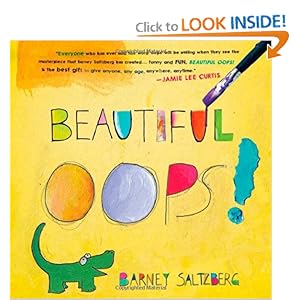
Though not an art history book Beautiful Oops is included because it teaches confidence in creative process and to take an unconventional view at art. 
Beautiful Oops
Love! With oops turning into something new altogether, this book is as fun as it is unique.

Last but not least, don't let black and white illustrations of this book fool you. Chock full of art projects teaching kidfolk about the great artists it is rich and creative, from Gothic to Dada collage. WARNING: purchasing this book may also result in an excessively large order of art supplies.
Good to be back after a busy month!

PS Images are snagged from Amazon where I often buy these very treasures.

December 11, 2012

New (Old) Crayons

‘Twas the night before Tuesday, when all through the house
Not a creature was stirring, not even a mouse.
The lunches were packed, counters wiped off with care,
In hopes that weekend soon would be there.

The children were bathed and at last in their beds,
While visions of angry birds danced in their heads.
And mamma, nose-deep in her Pinterest app,
Instead of hitting the treadmill had decided to make projects from scrap.


Yes, that is how it happen. With old broken up crayons and a silicone mold in hand, I embarked on remaking of the crayons. A wiser woman would have poured a glass or yesterday's Chardonnay. And, I might add, melting crayons turned out to be very satisfying and easy.

Look familiar?
I've had a silicone ice cube mold for years but never got around to making sea-shell shaped ice. Bits of crayons went into the mold and into the toaster oven at 200 degrees. Ten minutes or so should melt the crayons. Be careful pulling out the tray, so you don't end up with orange crayon goo all over the toaster oven.

At long last ice-cube silicone tray had a purpose.
I could hardly wait for crayon liquid to cool! Pop, out of the mold came out cute little crayons shaped like shells (hearts or fish would be cute too, no?). Sure, I could buy a box for $3 at Target but would they be as cool as this? You tell me.

Note to self: Melting stuff is fun, must do more often. And invest in more silicone trays for future crayon-making.
 
That's that. One more thing - stick with high quality crayons and trash the off-brand ones, they just didn't melt well.  


October 24, 2012

Old Friends (from the permanent collection)

Last week I took a day off work. I was not traveling and I did not spend the day on the playground. Instead I headed for the National Gallery of Art. As I made my way through the galleries, I visited some old "friends" and spotted some new works.

I have the softest of spots in heart for Andre Derain's Charing Cross Bridge. I had a print of this work years ago in my very first apartment. Of course no print can convey the vibrant colors and beauty. The pink sky still takes my breath away.

Andre Derain Charing Cross Bridge
André Derain, Charing Cross Bridge, London, 1906, National Gallery of Art, Washington, John Hay Whitney Collection

Just feet away, hangs Tugboat on the Seine by a chum of Derain's, Maurice de Vlaminck. Did friends ever imagine some hundred years ago that their works would hang side by side in museums?


Maurice de Vlaminck Tugboat on the Seine
Maurice de Vlaminck, Tugboat on the Seine, Chatou, 1906, National Gallery of Art, Washington, Collection of Mr. and Mrs. John Hay Whitney

Robert Delaunay's work has a striking resemblance to the style of his wife Sonia Delaunay.  The same flat vibrant color. The same spheres. Surely today they would run a design studio and have their own Target product line.

Robert Delaunay Political Drama
Robert Delaunay, Political Drama, 1914 Gift of the Joseph H. Hazen Foundation, Inc.
On a wall just over is a portrait by the great Pablo Picasso, before he went off the deep end into cubism (I get it, just don't love it). A search for Petrus Manach, an art dealer, doesn't reveal much except this portrait that forever immortalized his likeness. Money well spent, Sir.

Pablo Picasso Petrus Manach
Pablo Picasso, Pedro Mañach, 1901 Chester Dale Collection

Despite the gentle colors, I have always found this work heartbreaking. It is their faces full of sorrow, the thought of what these haunting eyes have seen, their closeness and distance (Gorky's mother died of starvation long before this work was started).   Beautiful, fragile, and tragic.


Arshille Gorky The Artist and his mother

Arshile Gorky The Artist and His Mother Alisa Mellon Bruce Fund
 
I confess, I have not heard of Lyonel Feininger before this visit, but the movement of this work, drew my eye immediately across the gallery. Dynamic and bright, it shook me out of melancholy of Arshile Gorky.
 
Lyonel Feininger The Bicycle Race, 1912 Collection of Mr. and Mrs. Paul Mellon

Yes, I know what I said about cubism, but this work takes breath away (literally, holds you still so to not make too much noise). For its diminutive size it packs a lot in, creating a feeling of standing in the middle of a cathedral and expecting to hear echo. It is fantastic!

Max Weber Interior of the Fourth Dimension, 1913 Gift of Natalie Davis Spingarn in memory of Linda R. Miller and in Honor of the 50th Anniversary of the National Gallery of Art

August 26, 2012

From the Highlands

Somehow, I stumbled on the National Galleries Scotland website. In addition to a well chosen and rich collection, the gallery features local talent. Admittedly my knowledge of Scotland's art and artists is lacking but I was instantly taken with the paintings, the sort of paintings that would be easy to live with, reminiscent of the French artists, but more understated.

One of the ‘Scottish Colourists’ is John Duncan Fergusson. The street scene is, well, as street scene. But it is restful to look at even if not completely unique.

John Duncan Fergusson: Rue St. Jaques from National Galleries of Scotland


Another Scottish Colourist - and a friend of John Duncan Fergusson's - is Samuel John Peploe. The flat surfaces reminded me of Cezanne but more sober with grays and blues.

Iona Landscape Rocks Samuel John Peploe
Iona Landscape: Rocks. Samuel John Peploe
 Then there is this still life by William York MacGregor, one of the Glasgow Boys. The bounty is charming and very much reminds me of the modern day farm stand. X-rays reveal that the artist originally painted a girl next to the table of produce but then thought better of it and covered her up. Whatever his reasons, the painting is better for it.


The Vegetable Stall William York MacGregor Glasgow Boys
The Vegetable Stall, William York MacGregor
Lastly a more modern piece, a portrait that caught my eye with its movement and color choices. Learning that the subject is theoretical physicist Peter Higgs (yes, the elusive particle is named for him), made the piece even more intriguing.

Peter Higgs Portrait by Lucinda Mackay
Peter Higgs by Lucinda Mackay
 All the photos are from National Gallery Scotland website. They have comprehensive background on Scottish art (if not Scotland's National Gallery than who?).


August 19, 2012

August: All Things Japanese

As of late we've been admiring all things Japanese everywhere we turn. Take Hokusai's wave. Recently we saw this iconic image for the very first time in person. Despite the crowds clustered in the small gallery, we braved it. The print was diminutive for a work of this magnitude and, perhaps, better admired in solitude, yet it was a sight to behold. Sharp deliberate lines, still vibrant colors, and that odd mixture of two dimensional flatness with a hint of perspective.
Detail from Under the Wave off Kanagawa by Katsushika Hokusai. Published by Eiudo. H. O. Havemeyer Collection, Bequest of Mrs. H. O. Havemeyer, 1929 (JP1847). Location: The Metropolitan Museum of Art, New York, NY, U.S.A. Photo Credit: Image copyright © The Metropolitan Museum of Art. Image source: Art Resource, NY


~~~


By chance, I found myself reading about WabiSabi, Japanese aesthetic that accepts and embraces the beauty in transience and imperfection. The philosophy felt like a calming antidote to overwhelming  consumption and hallow cheap props. All about delicate and understated, rather than grand and showy. I imagine it is about rough linen, weathered wood, slightly uneven pottery. I find myself longing to simplify and declutter.

~~~

During the morning commute an unlikely subject came up: haiku. Realizing gaps in our own knowledge we put Siri to work. There is an excellent lesson plan on haiku if you are supplementing your tots learning at home. The itty bitty poems, often with a seasonal reference, pack a surprising emotional punch, a depth of feeling boiled down to three lines. How does one choose the right words to convey complixity and observe humanity?

First autumn morning:
the mirror I stare into
shows my father's face.

~Kijo Murakami


~~~
Packing lunches, lets face it, is a bane one one's existence. No doubt Klatch tots will not be opening cute bento boxes to the envy of their tot friends. For now, I will stick with sticking notes into their lunch packs.
Photo: Jason Miller in NYTimes
Until next time!

August 15, 2012

Wednesday: Virginia by Rodger Fry

I haven't posted a Wednesday painting in some weeks so perhaps it is time. The Bloomsbury Group still captures imagination today, a bohemian Olympus of sorts. Artists Rodger Fry by all accounts had a complicated life and was close to both Vanessa Bell and her sister Virginia Woolf. So behold a portrait of Virginia by Rodger Fry.  He painted her likeness and she wrote his biography.

Virginia Woolf by Rodger Eliot Fry
Copyright:  © Bridgeman Art Library / On Loan to Leeds Museums and Galleries (City Art Gallery)

July 27, 2012

Virginia's Sister

Virginia Woolf's older sister, Vanessa Bell, was a talented artist and among Bloomsbury Group's founders. Bloomsbury group draws one like a bohemian Camelot, it still feels oh-so-very modern more than a century later.  What it must have been like to be in the room with these artistic intellectuals, a product of their time?

This portrait by Vanessa Bell (currently at Tate) is stare-worthy. The colors and the rendering of the face are lovely and somehow cozy, like tweed and wool.

Helen Dudley by Vanessa Bell (1915ish) - currently at the Tate

May 23, 2012

Wednesday: Butterflies by an Edwardian Lady

If Persephone store ever comes to U.S. what a lovely place that would be to spend a rainy afternoon. And their blog is not too shabby often featuring lovely works of art by unknown artists, many of them women.

I do love art plates of insects and flowers. This plate featured on Persephone Post came from an antique rather dull book by an Edwardian Lady. But the meticulous watercolors are lovely.


Until next Wednesday!

May 2, 2012

Wednesday: HRH by Lucian Freud

I have been slacking all April but Wednesdays are back with Lucian Freud's depiction of HRH Queen Elizabeth.  Because he is related to the other Freud and has a way with a paintbrush and she is thoroughly modern.

I don't know where the portrait actually resides but this came from BBC. Apparently there is come controversy about the depiction but I like it!

March 23, 2012

From Irises to Abstract

When it comes to appreciating art, most of us first learn about Monet’s lilies or perhaps Van Gogh’s sunflowers before getting to the really good stuff. I am not here to judge anyone on the account of art tastes, especially since Van Gogh’s irises are perhaps my first art memory, but I’ve been pondering art a lot lately and noticed that my tastes evolved.

First it was the palatable and easy art. Bright colors, sunny day, what’s not to like?

Vincent Van Gogh, Irises (1889) from The J. Paul Getty Museum

Then I moved on to art with a story, with characters with complex relationships with each other and their viewers. Like Toulouse Lautrec, Marc Chagall,. Or Edward Hopper. Who is this woman waiting for in the hotel? Is she sad, lonely, or merely indifferent?

Edward Hopper, Hotel Window (1955) from Smithsonian American Art Museum, their Hopper Scrapbook is pretty awesome, by the way. 

I begun to truly appreciate the Old Masters, Frans Hals, Diego Velazquez, El Greco, Ingres, after learning about oil painting process, pigments, and composition. I still have much to learn...

Frans Hals, Youth with a Skull (1626-28)

Lately, I turned another leaf and am drawn to abstract pieces. I don’t know what it means, it does not invoke any deep thoughts or meaning. But I like it. Jackson Pollock, Robert Motherwell, Brice Marden, Lee Krasner, Franz Kline, or Emily Kame Kngwarreye.

Robert Motherwell, Elegy to the Spanish Republic 70 - at the Met
Brice Marden Vine (1991-93) from MoMA.org

You might enjoy:

March 7, 2012

Wednesday: Woman with Hat

Even Leo Stein, Gertrude's cantankerous brother, dismissed this portrait. Beauty is the eye of the beholder. So behold.

Henri Matisse (French, 1869–1954)
Woman with a Hat (1905)
San Francisco Museum of Modern Art, Bequest of Elise S. Haas
© 2012 Succession H. Matisse / Artists Rights Society (ARS), New York

March 1, 2012

Almost Wed: Federico Degetau y Gonzalez

Lately, I've been lusting after portraits - and stories they tell. This post is to make up for yesterday, which I missed. Great colors and unconventional composition. Love!

Federico Degetau y Gonzalez
oil by Samuel Sanchez (1956) - featured by the National Portrait Gallery

February 22, 2012

February 15, 2012

February 1, 2012

Glorious Venice

Is wordless Wednesday still a thing?
Joseph Mallord William TurnerThe Dogana and Santa Maria della Salute, Venice, 1843
Source: The National Gallery of Art

LinkWithin

Related Posts Plugin for WordPress, Blogger...